
Am I Depressed or Just feeling low?

Dearest gentle readers,

We all have rough days.
Days that seem manageable with a little patience, a good night’s sleep, a conversation with a friend, or simply the passing of time.
When the storm settles, life often picks up exactly where it left off.
The sun shines again. Food tastes good. Music sounds pleasant. The things we enjoy begin to feel enjoyable once more.
That is what feeling low often looks like.
But sometimes, even after the storm has passed, we struggle to pick ourselves up.The fog lingers. It affects everything around you. Even when the sun comes out, you may struggle to feel its warmth.
The things that once brought comfort feel distant. Getting out of bed feels like a task. The day ahead feels heavy before it has even begun.
Some times,all of this can occur without any known reason.
That is when we start asking a different question:
Is this sadness, or could it be depression?

When I started a new job, I noticed I wasn’t feeling quite like myself.
My routine changed. Exercise,good social interactions disappeared from my schedule. Home wasn’t a walk away from work. The little moments that usually brought me joy the “glimmers” in my day became less frequent.
I felt low.
I was less energetic, less enthusiastic, and somewhat disconnected from myself. However, I was still seeking comfort and joy from the things that gave me previously.
But I wasn’t depressed.
As I settled into my new role and gradually reintroduced the habits that helped me feel grounded, I started feeling better.
This is an important distinction.
Feeling low is often a signal that something in our lives needs attention.
Depression is more than that.
🌸🌸🌸 Feeling Low vs Depression

What Does Depression Mean Medically?
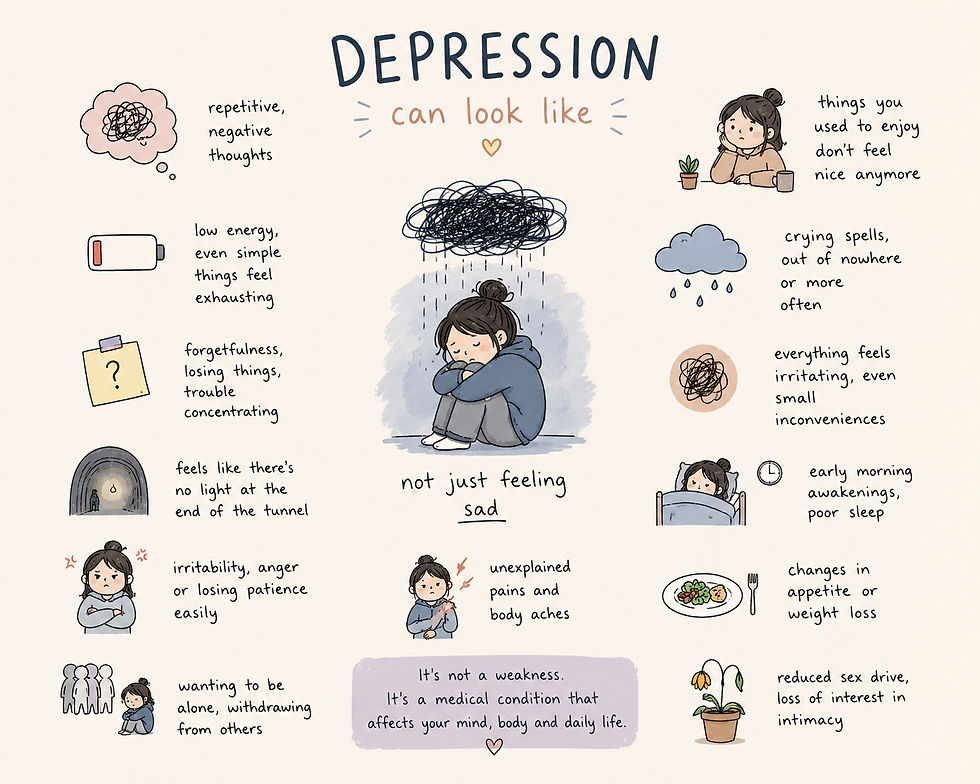
Depression is not simply sadness.
Just as diabetes involves problems with insulin and obesity involves changes in metabolism and hormones, depression is a biological illness involving changes in brain chemicals and brain circuits.

When these circuits are not working optimally, it can feel as though there isn’t enough “oil” running through the system. Thoughts begin to get stuck.
The mind starts filtering for the negative. Positive experiences are overlooked, while mistakes, worries and disappointments are given centre stage.
Activities that once brought pleasure like meeting friends, watching a favourite show, listening to music, spending time with family may no longer feel enjoyable.
Even simple daily tasks can become exhausting.
Getting out of bed, taking a shower, replying to a message, cooking a meal, or getting through a workday may require tremendous effort.
Many people notice they become forgetful. They misplace keys, forget conversations, lose track of tasks, or struggle to concentrate.
Some describe it as feeling as though there is no light at the end of the tunnel. Others feel detached from life, as if they are merely going through the motions.
Depression can also affect emotions in different ways.
Some people cry more frequently or experience crying spells that seem to come out of nowhere.
Others don’t feel sad at all.
Instead, they become constantly angry, irritable, or impatient. Everyday inconveniences that were once manageable suddenly feel unbearable and thoughts of self harm begin.
Depression can also show up in the body.
People may experience:
Unexplained aches and pains
Early morning awakenings
Changes in appetite or weight
Reduced sex drive
Persistent fatigue
A feeling of being physically drained despite adequate rest
This is why depression can look different from person to person.
For one person it may look like sadness.
For another it may look like anger.
For someone else it may look like tiredness, body pains, forgetfulness, or withdrawal from loved ones.
🚨🚨🚨🚨🚨🚨🚨🚨🚨🚨🚨🚨🚨🚨🚨🚨
The important question is not, “Do I look depressed?”
The important question is:
Is this affecting my relationships, my sleep, my appetite, my work, my studies, or my ability to function the way I normally do?
When symptoms begin to disrupt everyday life, it may be time to seek help.
🌸A Quick Self-Check:
PHQ-9 - Screening for Depression
Over the last two weeks, how often have you been bothered by the following problems?
Score each question:
0 = Not at all
1 = Several days
2 = More than half the days
3 = Nearly every day
Questions
Little interest or pleasure in doing things
Feeling down, depressed, or hopeless
Trouble falling asleep, staying asleep, or sleeping too much
Feeling tired or having little energy
Poor appetite or overeating
Feeling bad about yourself or that you are a failure or have let yourself or your family down
Trouble concentrating on things such as reading, watching television, or working
Moving or speaking so slowly that other people could notice, or being unusually restless and fidgety
Thoughts that you would be better off dead or of hurting yourself in some way
Interpretation
0–4: Minimal or no depression
5–9: Mild depressive symptoms
10–14: Moderate depression
15–19: Moderately severe depression
20–27: Severe depression
A PHQ-9 score is not a diagnosis, but it can be a useful starting point for discussion with a mental health professional.

A Final Thought💌
Feeling low is part of being human.
Every life contains cloudy days, difficult transitions, disappointments, and storms.
Depression is different.
It is not simply sadness that needs cheering up. It is a condition that affects how we feel, think, function, and experience the world around us.
If you’ve been wondering whether what you’re experiencing is “just stress” or something more, you don’t have to figure it out alone.
Sometimes clarity begins with a conversation.
And sometimes, asking for help is the bravest thing we do.


Comments